Are You Breathing Your Memory Away? The Hidden Cost of Mouth Breathing After 50
How you breathe affects how you think. Discover why mouth breathing starves your brain of oxygen—and the simple techniques to restore clarity and focus.
1/5/20265 min read


A Question You've Probably Never Asked Yourself
Before you read another word, try something.
Close your eyes for just a moment. Don't change anything simply notice. Is your mouth open or closed right now? Are you breathing through your nose or your mouth? And where is your tongue resting pressed against the roof of your mouth, or slack at the bottom?
Most of us have never paid attention to these details. Breathing is automatic, after all. We do it roughly 20,000 times a day without a single conscious thought.
But here's what decades of research now confirm: how you breathe profoundly shapes how well your brain functions especially as you age.
If you've noticed increasing brain fog, difficulty concentrating, or a memory that doesn't feel as sharp as it used to, your breathing pattern might be quietly contributing to the problem.
Why Your Nose Is More Than Just a Nose
When we're born, we breathe exclusively through our noses. It's our natural design. But somewhere along the way through allergies, stress, habit, or simply not paying attention many of us become chronic mouth breathers.
This matters far more than you might think.
Your nose isn't simply a passive hole for air to enter. It's a remarkably sophisticated system that filters, warms, humidifies, and pressurizes the air before it reaches your lungs. When you bypass this system by breathing through your mouth, you're essentially taking a shortcut that costs you dearly.
Here's what happens when you breathe through your nose:
Your nasal passages release nitric oxide, a molecule that dilates blood vessels and significantly improves oxygen absorption in your lungs. Research published in the American Journal of Respiratory and Critical Care Medicine found that nasal breathing increases oxygen uptake compared to mouth breathing—meaning more fuel reaches your brain with each breath.
Nasal breathing also naturally activates your parasympathetic nervous system the "rest and digest" mode that promotes calm, focused attention. Your heart rate slows slightly, your blood pressure decreases, and your brain receives the signal that you're safe. In this state, complex cognitive functions like memory consolidation work optimally.
Here's what happens when you breathe through your mouth:
Your body interprets mouth breathing as a sign of exertion or emergency. It activates the sympathetic nervous system the "fight or flight" response designed to help you survive immediate threats.
In this state, your brain prioritizes survival functions over "non-essential" processes like storing new memories or engaging in creative thinking. Stress hormones like cortisol and adrenaline rise. Over time, chronically elevated cortisol damages the hippocampus, the brain region responsible for forming and retrieving memories.
If you're a habitual mouth breather particularly during sleep—you may be keeping your brain in a subtle but constant state of stress without realizing it.
The Sleep Connection: When Mouth Breathing Does Its Worst Damage
For adults over fifty, nighttime mouth breathing is especially concerning.
During sleep, your brain performs essential maintenance: consolidating memories, clearing metabolic waste, repairing cellular damage. This restorative process depends on deep, uninterrupted sleep stages which mouth breathing disrupts.
Mouth breathing during sleep often leads to snoring and is closely associated with sleep apnea, a condition where breathing repeatedly stops and starts throughout the night. Each time your oxygen levels drop, your brain partially wakes to restart breathing, even if you don't remember it. The result: fragmented sleep that leaves you exhausted and foggy, no matter how many hours you spent in bed.
Studies from the Journal of Clinical Sleep Medicine have linked untreated sleep apnea to accelerated cognitive decline and increased risk of dementia in older adults.
The simple act of keeping your mouth closed during sleep can be transformative. Many people have found success with mouth tape a gentle adhesive strip placed over the lips before bed that encourages nasal breathing throughout the night.
It sounds strange at first. But users consistently report deeper sleep, less snoring, and waking with clearer minds. If you're curious, start with a high-quality, skin-safe option designed specifically for sleep.
Check Price on Amazon:AFFILIATE_LINK - Mouth Tape
The 60-Second Reset: Box Breathing Explained
You can begin retraining your breathing right now, with a technique so effective it's used by Navy SEALs to maintain focus under extreme pressure.
It's called Box Breathing named because each phase lasts an equal amount of time, like the four sides of a square.
Here's how to do it:
Inhale slowly through your nose for 4 seconds. Feel your belly expand rather than your chest rising. This is diaphragmatic breathing, and it maximizes oxygen intake.
Hold your breath gently for 4 seconds. This isn't about straining—just a comfortable pause that allows oxygen to fully absorb into your bloodstream.
Exhale slowly through your nose for 4 seconds. Control the release, letting the air flow out steadily rather than rushing.
Hold your lungs empty for 4 seconds. This brief pause completes the cycle and prepares your body for the next breath.
Repeat this cycle four times. The entire practice takes about one minute.
What you'll likely notice: your shoulders drop, your jaw unclenches, and a subtle clarity settles over your thinking. That's the feeling of your nervous system shifting from stress mode to restoration mode—and oxygen finally reaching your brain efficiently.
When to use it:
First thing in the morning, before reaching for your phone
Before important conversations or decisions
Whenever you notice anxiety or mental fog creeping in
Before bed, to prepare your body for restful sleep
This technique costs nothing and requires no equipment. Yet its effects on focus, memory, and emotional regulation are profound when practiced consistently.
Going Deeper: Understanding the Science of Breath
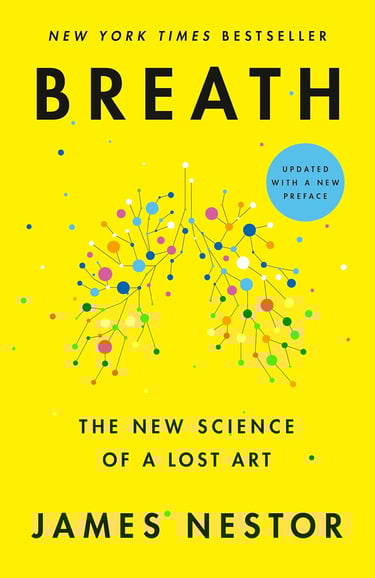
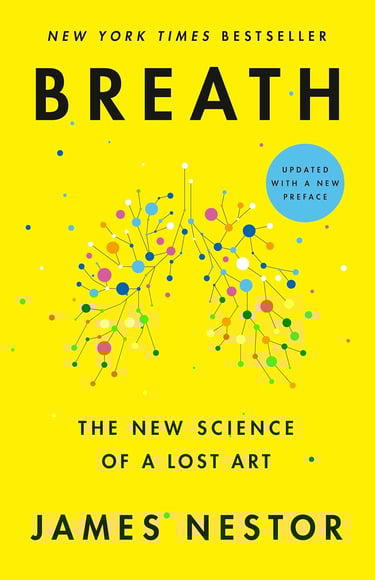
If this topic resonates with you, I highly recommend the book Breath: The New Science of a Lost Art by journalist James Nestor.
Nestor spent years investigating how modern humans have lost the ability to breathe correctly and the surprising consequences for our health, from crooked teeth to chronic anxiety to cognitive decline. He interviews scientists, explores ancient breathing practices, and serves as his own test subject in experiments that changed his own health dramatically.
It's accessible, fascinating, and genuinely useful. For anyone over fifty wanting to understand how something as simple as breathing affects memory, sleep, and longevity, it's essential reading.
When Breathing Practice Needs Support
Correcting your breathing habits is powerful perhaps one of the most powerful things you can do for your brain without spending a dollar.
But here's the reality: if you've spent years or decades as a mouth breather, if chronic stress has kept your nervous system locked in overdrive, the patterns are deeply ingrained. Conscious effort helps, but sometimes you need additional support to retrain your brain's baseline rhythm.
This is where sound-based therapy offers a unique advantage.
Specific audio frequencies can guide your nervous system toward the calm, coherent state that optimal breathing creates without requiring you to count seconds or remember techniques. Your body naturally synchronizes with the rhythm.
The practice known as "The Brain Song" uses precisely calibrated soundwaves that encourage slow, deep breathing automatically. Many people find that listening while practicing box breathing amplifies the benefits of both—creating a deeply restorative experience in just minutes.
Think of it as training wheels for your nervous system, gently guiding it back to the healthy rhythm it was designed for.
>> Click Here to Discover the Audio Ritual
Your Next Breath Matters
Here's the remarkable thing about breathing: unlike so many health factors, it's entirely within your control, starting immediately.
You don't need to buy anything. You don't need to wait for a doctor's appointment. You don't need to overhaul your life.
You simply need to close your mouth, breathe through your nose, and pay attention.
The brain fog you've attributed to aging, the memory lapses you've accepted as inevitable, the sleep that never quite refreshes you—some of this may improve simply by changing how air enters your body.
Your next breath is an opportunity. Take it through your nose.


Connect
Stay updated with brainhealth tips weekly
© 2025. All rights reserved.