Why Learning an Instrument After 50 Is the Best Gift You Can Give Your Brain
Think you're too old for piano lessons? Neuroscience disagrees. Discover why music is the ultimate brain workout—and how to start today.
1/12/20267 min read
This article contains affiliate links. As an Amazon Associate, I earn from qualifying purchases at no additional cost to you.
The Dream You Put on Hold
Maybe it was a piano in your grandmother's living room. Maybe it was a guitar you saw someone playing at a party decades ago. Maybe you took lessons as a child but life got busy career, family, responsibilities and the music quietly faded.
Now, in your fifties or sixties, you sometimes catch yourself watching someone play and feeling that old longing stir. But then a familiar voice whispers: I'm too old. I missed my chance. My fingers are too stiff. I'd embarrass myself.
Here's what I want you to know: that voice is lying to you.
Not only is it possible to learn an instrument after fifty it may be one of the most powerful things you can do for your brain, your emotional health, and your sense of purpose in this chapter of life.
And neuroscience has the evidence to prove it.
What Happens in Your Brain When You Play Music
In 2014, neurologist Dr. Gottfried Schlaug at Harvard Medical School conducted brain imaging studies that changed how we understand music and the mind. When researchers observed people playing instruments inside fMRI scanners, they expected to see activity in one or two brain regions.
Instead, they saw fireworks.
Playing music activates nearly every area of the brain simultaneously visual, auditory, and motor cortices all firing in coordination. Unlike passive listening, playing requires your brain to read notes (visual processing), translate them into finger movements (motor control), listen to what you're producing (auditory feedback), and adjust in real-time (executive function).
No other activity demands this level of simultaneous, cross-brain coordination.
Dr. Schlaug's research revealed something else remarkable: musicians have a measurably thicker corpus callosum—the bundle of nerve fibers connecting the brain's left and right hemispheres. This "bridge" allows faster communication between brain regions, which translates to quicker thinking, better problem-solving, and stronger memory recall.
The encouraging part? You don't need to be a virtuoso. Studies published in the Journal of Neuroscience found that even amateur adult musicians showed increased gray matter volume after just four to six months of regular practice.
Your brain is waiting to grow. It just needs you to give it a reason.
Three Profound Benefits of Learning Music Later in Life
1. It Builds Gray Matter Where You Need It Most
Gray matter is the tissue containing your brain's nerve cell bodies—the processing power behind thinking, memory, and perception. We naturally lose gray matter volume as we age, which contributes to slower recall and difficulty learning new information.
But learning an instrument reverses this trajectory.
Research from the University of Zurich found that older adults who took piano lessons showed measurable increases in gray matter density in regions responsible for memory, motor control, and auditory processing. These weren't professional musicians they were beginners in their sixties who practiced regularly for six months.
The brain, it turns out, follows a simple rule: use it, and it grows. Learning music gives your brain exactly the kind of complex, sustained challenge that stimulates growth.
2. It Sharpens Executive Function
Executive function is your brain's command center the capacity to plan, focus attention, remember instructions, and juggle multiple tasks. It's what allows you to follow a recipe while having a conversation, or navigate to an unfamiliar location while monitoring traffic.
This capacity typically declines with age. But music training appears to protect and even enhance it.
When you play an instrument, you're constantly looking ahead reading the next measure while your fingers play the current one, anticipating tempo changes, adjusting dynamics. This ongoing mental juggling strengthens the prefrontal cortex, the brain region responsible for executive function.
A study from the Brain and Creativity Institute at USC found that older adults with musical training outperformed non-musicians on tests of cognitive flexibility and working memory. The more years of training, the stronger the effect but even beginners showed improvement.
3. It's Medicine for the Soul
Beyond the cognitive benefits, there's something music provides that's harder to measure but equally important: joy, purpose, and emotional expression.
Learning a new skill in your fifties or sixties especially one you've always wanted to pursue creates a powerful sense of momentum and possibility. Each small victory, whether it's playing your first complete song or finally mastering a tricky passage, releases dopamine, the neurotransmitter associated with pleasure and reward.
This matters more than you might think. Depression and anxiety become more common with age, often connected to loss of identity after retirement, grief, or simply feeling irrelevant in a fast-changing world. Music offers something to work toward, something that's entirely yours, and a form of expression that transcends words.
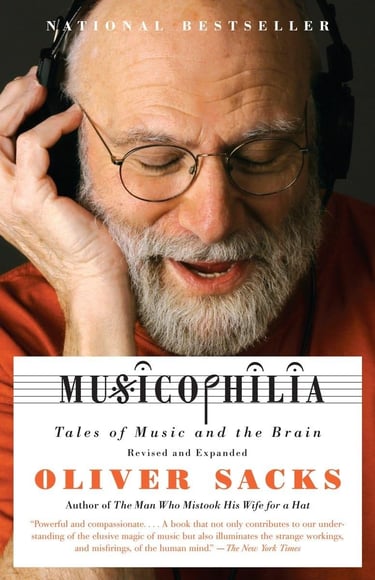
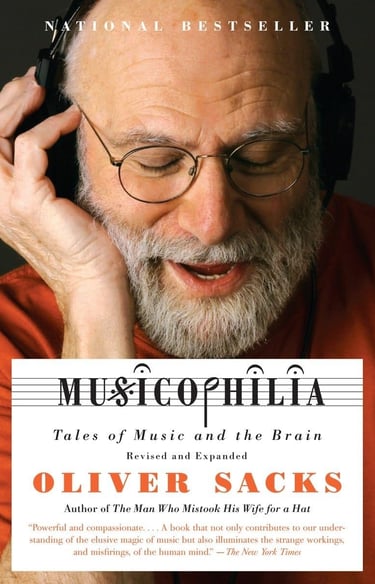
Neurologist Oliver Sacks, in his beautiful book Musicophilia: Tales of Music and the Brain, documented countless cases of patients whose lives were transformed by music—people with Parkinson's who could suddenly walk smoothly while playing, stroke survivors who regained speech through singing, elderly patients with dementia who came alive when they heard familiar songs.
Music reaches parts of the brain that nothing else can touch.
But What About Stiff Fingers and Slow Progress?
Let's address the elephant in the room: learning as an adult is different from learning as a child.
Children absorb new skills almost unconsciously. Their brains are in a state of heightened plasticity, forming new neural connections with minimal effort. Adults, by contrast, often feel like they're pushing against resistance. The fingers don't cooperate. The progress feels painfully slow. Frustration mounts.
This is real, and it's okay to acknowledge it.
But here's what the research also shows: while children learn faster, adults learn deeper. Your life experience, your ability to understand context, your motivation these are advantages children don't have.
The key is managing frustration and giving your brain the right conditions to absorb new information.
Neuroscientists have found that the brain learns best in a relaxed, focused state what's sometimes called the "alpha wave" state. When you're stressed or frustrated, your brain shifts into defensive mode, which actively inhibits learning. When you're calm and present, neural pathways form more easily.
This is why warming up your mind before practice can make such a difference. Some people meditate. Some take a short walk. Others have found that listening to specific audio frequencies helps shift their mental state into optimal learning mode.
The practice known as "The Brain Song" uses calibrated soundwaves designed to promote this relaxed, receptive state. Listening for 15-20 minutes before picking up your instrument can make practice feel less like a struggle and more like play.
Think of it as stretching before exercise—preparing your brain to be flexible and open to new patterns.
>> Click Here to Discover the Audio Ritual That Supports Learning
How to Actually Start (A Practical Guide)
Knowing the benefits is one thing. Taking action is another. Here's how to begin:
Choose the Right Instrument
For most beginners over fifty, keyboard or piano offers the gentlest entry point. The layout is logical and visual—notes go from low to high, left to right. You don't need to develop calluses like guitarists do, and you can play recognizable melodies within your first few sessions.
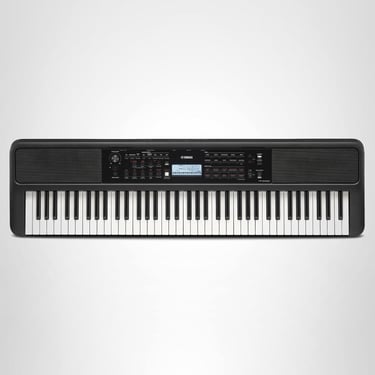
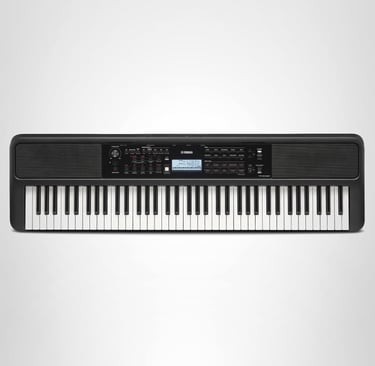
A full acoustic piano isn't necessary. A quality digital keyboard with weighted keys provides an authentic feel at a fraction of the cost and space. The Yamaha PSR-EW320 is an excellent beginner option—affordable, portable, and with built-in lessons to guide your first steps.
Consider Guided Learning at Home
Traditional in-person lessons are wonderful if you can find a patient, adult-friendly teacher. But many people over fifty prefer the privacy and flexibility of learning at home, especially in the beginning when self-consciousness is highest.
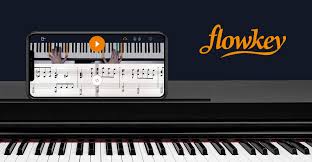
Apps like Flowkey connect to your keyboard and listen as you play, providing real-time feedback and guiding you through songs step by step. You can practice at midnight in your pajamas if you want no judgment, no schedule pressure.
Start Embarrassingly Small
Commit to just ten minutes a day. Not an hour. Not even thirty minutes. Ten.
This removes the psychological barrier that stops most people from starting. Ten minutes is short enough that you can't talk yourself out of it, but long enough to make genuine progress over weeks and months.
As the habit solidifies, you'll naturally want to play longer. But in the beginning, consistency matters far more than duration.
Embrace the Beginner's Mind
You will sound bad at first. This is not failure it's the necessary first step of every journey worth taking. Even concert pianists once stumbled through "Twinkle Twinkle Little Star."
Give yourself permission to be a beginner. That willingness to be awkward, to not know, to learn slowly—it's not weakness. It's courage. And it's exactly what your brain needs to grow.
The Music Is Still Inside You
There's a quote often attributed to Oliver Wendell Holmes: "Many people die with their music still in them."
It doesn't have to be that way for you.
The piano you've walked past a hundred times, the guitar gathering dust in the closet, the keyboard you've looked at online but never ordered—they're all invitations. Not to become a performer or impress anyone, but to give your brain the most complete workout it can receive. To feel the satisfaction of creating something beautiful with your own hands. To discover a part of yourself that's been waiting patiently all these years.
You're not too old. Your fingers aren't too stiff. You haven't missed your window.
The only moment that matters is this one. And in this moment, you can choose to begin.
Connect
Stay updated with brainhealth tips weekly
© 2025. All rights reserved.