Your Second Brain
Why Your Gut Health Decides If You Get Dementia
Fred
4/9/20266 min read
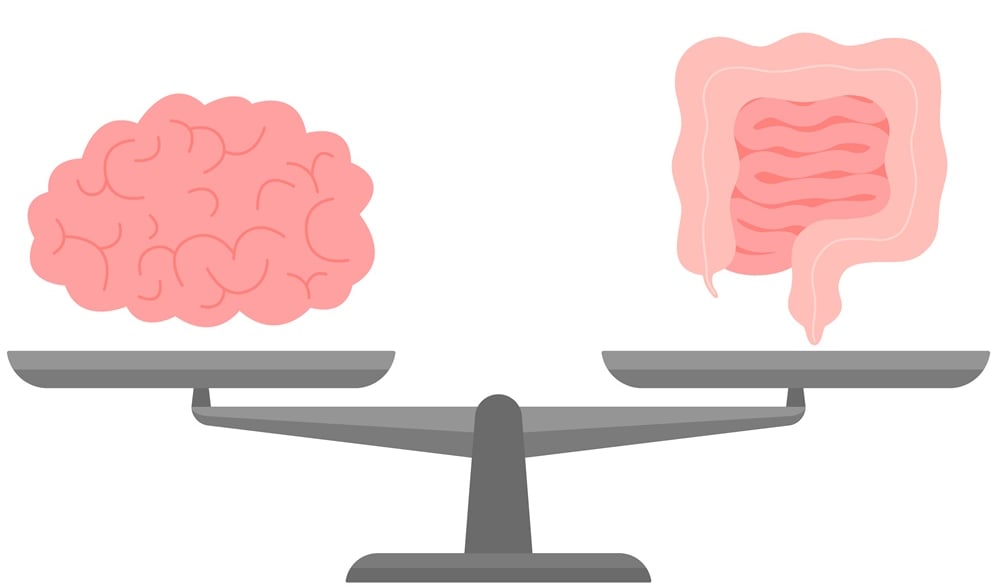
There's a tube of tissue in your abdomen that contains more neurons than your spinal cord. It produces 90% of your body's serotonin. It has its own nervous system — one that keeps working even if you cut every nerve connecting it to your brain.
Scientists used to call it the "second brain." Lately, they've started wondering if it's more like the first.
New research on the gut-brain axis has upended how neurologists think about Alzheimer's, Parkinson's, and other dementias. The evidence now points in an uncomfortable direction: the microbial ecosystem in your gut may influence whether your brain ages cleanly or begins to deteriorate decades before you notice any symptoms.
This isn't fringe science. It's being published in Nature, Cell, and The Lancet. And for anyone over 50, it deserves your full attention.
The Gut-Brain Axis: A Two-Way Highway
Your gut and your brain stay in constant contact through a network called the gut-brain axis. This system includes the vagus nerve (a direct line from your brainstem to your digestive organs), the enteric nervous system embedded in your gut lining, and a continuous chemical conversation carried out through hormones, neurotransmitters, and immune signals.
What travels along this highway isn't just digestion updates. Your gut microbiome — the roughly 39 trillion bacteria, fungi, and other microorganisms living in your intestines — produces compounds that cross into your bloodstream, influence inflammation throughout your body, and, critically, reach your brain.
Some of those compounds protect neurons. Others damage them.
Which ones dominate depends almost entirely on which microbes you're feeding.
What the Research Actually Shows
The connection between gut bacteria and dementia risk has been building for about a decade. Here's where the evidence stands:
Alzheimer's patients have a measurably different microbiome. A 2019 study published in Science Advances compared the gut bacteria of Alzheimer's patients with healthy controls and found significant differences — specifically, lower levels of anti-inflammatory bacteria and higher levels of species associated with intestinal permeability (the condition sometimes called "leaky gut"). This isn't correlation hunting. The pattern holds up across multiple independent studies.
Beta-amyloid — the protein that clogs Alzheimer's brains — is also produced in the gut. This surprised researchers. The gut produces amyloid proteins as part of normal bacterial communication, but certain imbalances appear to increase amyloid production systemically. Some researchers now believe gut-derived amyloid may seed the brain-level accumulation that defines Alzheimer's pathology.
Gut bacteria directly regulate brain inflammation. Neuroinflammation is increasingly understood as a core driver of cognitive decline — not just a symptom. The microbiome controls much of this through short-chain fatty acids (SCFAs), especially butyrate, which regulate the behavior of microglia, the immune cells of the brain. When SCFA production drops — which happens when gut bacteria diversity falls — microglia become overactive, and chronic low-grade brain inflammation follows.
The Parkinson's connection is even more direct. Alpha-synuclein, the misfolded protein central to Parkinson's disease, is now believed to originate in the gut in many cases and travel to the brain via the vagus nerve. This was proposed by Braak in 2003 and has since been supported by studies showing that people who had their vagus nerve severed decades ago had significantly lower rates of Parkinson's.
What Damages Your Gut Microbiome After 50
Age itself changes your microbiome — typically toward less diversity and more pro-inflammatory species. But several specific factors accelerate this:
Antibiotics. Each course can wipe out bacterial species that take months to recover — and some never do. This is not an argument against antibiotics when you need them. It's an argument for rebuilding microbiome diversity actively afterward.
A low-fiber diet. The bacteria that produce butyrate and other protective SCFAs eat fermentable fiber from vegetables, legumes, and whole grains. When fiber drops, these bacteria starve. The Western diet is genuinely bad for the microbial populations that protect your brain.
Chronic stress. Stress hormones directly alter gut motility and microbiome composition. The gut-brain axis runs both directions: brain states affect gut health, and gut health affects brain states.
Proton pump inhibitors (PPIs). These acid-reducing medications — Prilosec, Nexium, and others — alter the gut environment in ways that shift microbiome composition. Long-term PPI use has been independently associated with increased dementia risk in several large studies.
Sleep deprivation. The gut has its own circadian rhythm. Chronic poor sleep disrupts it, shifting the microbiome in ways associated with increased intestinal permeability and systemic inflammation.
What Protects It
The good news is that the microbiome is responsive. Unlike your genome, it changes based on what you eat and do — sometimes within days.
Dietary diversity is the single most powerful lever. The American Gut Project found that people who ate 30 or more different plant foods per week had significantly more diverse gut microbiomes than those who ate 10 or fewer. Herbs and spices count. You don't need 30 per day — just 30 different ones across the week.
Fermented foods increase microbial diversity. A 2021 Stanford study published in Cell directly compared a high-fiber diet versus a fermented-food diet in healthy adults. Fermented food — yogurt, kefir, kimchi, sauerkraut, kombucha — consistently increased microbiome diversity and reduced markers of inflammation. For people over 50 with already reduced microbiome diversity, starting with fermented foods may be the more effective first step.
🛒 If you're not ready to ferment at home, a high-quality multi-strain probiotic is a practical starting point. Look for formulas containing both Lactobacillus and Bifidobacterium strains, with at least 10 billion CFU per serving. [PROBIOTIC LINK HERE]
Prebiotic fiber feeds the right bacteria. Inulin and fructooligosaccharides (FOS), found in chicory root, Jerusalem artichoke, leeks, onions, and garlic, selectively feed the bacterial species most associated with SCFA production and reduced inflammation.
🛒 Prebiotic fiber supplements can help if your diet is still catching up. Look for products with inulin or FOS as the primary ingredient. [AMAZON PREBIOTIC LINK HERE]
Exercise changes the gut, not just the body. Physical activity increases butyrate-producing bacteria independently of diet. Even moderate exercise — 150 minutes of brisk walking per week — is associated with a more diverse, anti-inflammatory microbiome in older adults.
While Your Gut Heals: Supporting Your Brain in the Meantime
Rebuilding microbiome diversity takes time — weeks, sometimes months of consistent dietary change. That timeline matters if you're already experiencing brain fog, slower recall, or reduced mental clarity.
One approach that some people find helpful during this transition is audio-based cognitive support. The Brain Song is a 12-minute daily audio program built on gamma brainwave entrainment — a neuroscience technique where specific sound frequencies guide your brain into high-frequency states associated with focus, memory consolidation, and mental clarity.
It's not a replacement for gut health work. Think of it as a different lever: while fermented foods and prebiotic fiber are rebuilding your microbiome from the ground up, a daily 12-minute session with headphones gives your brain a different kind of input — one that doesn't require digestion, waiting periods, or any lifestyle overhaul.
The underlying science (gamma wave stimulation and BDNF activation) overlaps with the same biological targets that gut health research points to. BDNF — the protein your gut bacteria help regulate and that The Brain Song's frequencies are designed to stimulate — is the same molecule at the center of both approaches.
It costs $39 as a one-time purchase and comes with a 90-day money-back guarantee. For the risk profile, it's worth trying alongside the dietary changes.
What This Means for You
The brain you have at 70 is being shaped, in part, by your gut today.
A few practical anchors:
You don't need to overhaul everything at once. Adding two servings of fermented food per day and increasing plant variety are changes most people can sustain. The research doesn't support complex supplement stacks over basic dietary shifts.
If you've recently completed a course of antibiotics, the weeks afterward matter — that's when actively rebuilding through food and, if appropriate, a short probiotic course, has the most impact.
Talk to your doctor before stopping any medication, including PPIs. But if you're using them long-term, it's worth asking whether lifestyle modifications might reduce your dependence on them.
🛒 For stereo headphones to use with audio programs like The Brain Song — or simply for focus music during deep work — a reliable over-ear pair makes a real difference. [AMAZON HEADPHONES LINK HERE]
The Bottom Line
The old model of brain health was mostly about what happened inside the skull — plaques, tangles, neurotransmitters. The emerging model is more systemic. Your brain is downstream of your gut. The inflammation that damages neurons often starts in the intestine.
None of this means dementia is purely preventable or that your microbiome is the whole story. Genetics, cardiovascular health, sleep, and cognitive engagement all contribute.
But the gut is a lever. And for most people over 50, it's one that hasn't been pulled.
Connect
Stay updated with brainhealth tips weekly
© 2025. All rights reserved.